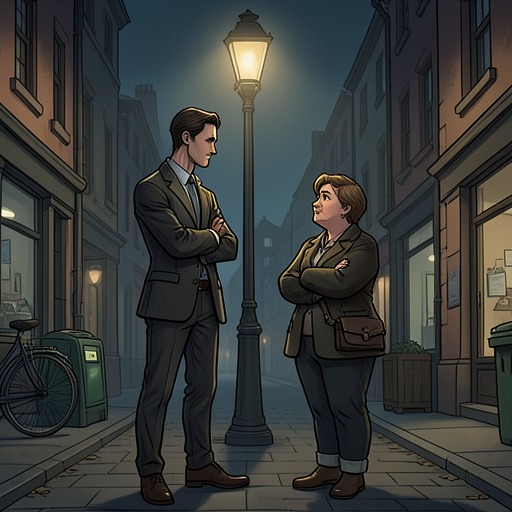
1984, at a university party
The First Glimpse
At a university party, [Emma Morley](entity:character-recall-character-emma-morley-0971773bd22e) first notices [Dexter Mayhew](entity:character-recall-character-dexter-mayhew-179632500f47). They do not yet become friends, but the sight of him lodges in her memory and gives their later meeting a history he does not share.
14 July 1988, evening
Graduation Night
After their graduation, [Emma Morley](entity:character-recall-character-emma-morley-0971773bd22e) and [Dexter Mayhew](entity:character-recall-character-dexter-mayhew-179632500f47) find themselves together at a crowded party. They talk, drink, and drift into a private intimacy that surprises them both; Emma has liked him for years, while Dexter has barely registered how much she matters.
15 July 1988, before dawn
The Night Together
In [Emma Morley](entity:character-recall-character-emma-morley-0971773bd22e)’s small room on [Rankeillor Street](entity:location-recall-location-rankeillor-street-7ffb2447252d), the pair kiss and talk through the night. Emma tries to imagine a meaningful adult life, while Dexter jokes about fame and comfort; both are afraid of the future, though neither says plainly what the other means to them.
15 July 1988, morning
The Morning After
[Dexter Mayhew](entity:character-recall-character-dexter-mayhew-179632500f47) starts to slip away while [Emma Morley](entity:character-recall-character-emma-morley-0971773bd22e) sleeps, convinced that leaving quietly will prevent complications. She wakes and challenges him, and he gives up his excuse to leave; they agree to spend the day together, turning an uncertain night into the beginning of a friendship.
15 July 1988, afternoon
The Arthur’s Seat Picnic
[Emma Morley](entity:character-recall-character-emma-morley-0971773bd22e) and [Dexter Mayhew](entity:character-recall-character-dexter-mayhew-179632500f47) climb [Arthur’s Seat](entity:location-recall-location-arthur-s-seat-4d11871da0d3) with food and warm champagne, awkwardly trying to understand what their night meant. Emma tells him she does not expect a romance, only an honest friendship, and they take a photograph together as a record of their first day.
15 July 1988, early evening
The First Kiss
After Dexter’s parents unexpectedly arrive in [Edinburgh](entity:location-recall-location-edinburgh-3139a0b6e81a), [Emma Morley](entity:character-recall-character-emma-morley-0971773bd22e) prepares to leave rather than intrude on his family plans. Dexter runs after her, asks for her contact details, and admits that he wants to kiss her; their kiss is tender and unguarded, a promise of future contact rather than a settled relationship.
Summer 1988
The Oxfordshire Visit
[Emma Morley](entity:character-recall-character-emma-morley-0971773bd22e) visits [Dexter Mayhew](entity:character-recall-character-dexter-mayhew-179632500f47)’s family home in [Oxfordshire](entity:location-recall-location-oxfordshire-02cd04fd8f7f) and encounters a world of wealth and ease unlike her own. Nervous and drinking too much, she argues with his father about Nicaragua and calls him a fascist, then lies awake regretting that her politics may have ruined her chance with Dexter.
April 1989
The Friendship Resumes
At a mutual friend’s birthday gathering in [London](entity:location-recall-location-london-420923d4a60a), [Emma Morley](entity:character-recall-character-emma-morley-0971773bd22e) and [Dexter Mayhew](entity:character-recall-character-dexter-mayhew-179632500f47) spend the next day talking in Kensington Gardens. Their closeness returns, but Dexter describes a new woman he met skiing, and Emma is left trying to hide the difference between friendship and the love she still feels.
Late 1988 to spring 1989
The Failed Projects
After university, [Emma Morley](entity:character-recall-character-emma-morley-0971773bd22e) tries a string of possible lives: a band, a club night, novels, summer jobs, and even circus skills. None gives her direction, and she eventually returns to her parents in [Leeds](entity:location-recall-location-leeds-197c9246b512), where daily questions about her degree deepen her sense that she has lost momentum.
Spring 1989
Emma Joins the Co-operative
Gary Nutkin invites [Emma Morley](entity:character-recall-character-emma-morley-0971773bd22e) to join [Sledgehammer Theatre Co-operative](entity:organization-recall-organization-sledgehammer-the-e41e6613a6a2), offering political theatre and the possibility of work that might matter. She leaves home with high ideals, hoping to change young lives through art, though she has little experience and uncertain ambitions as an actress.
July 1989
The Cruel Cargo Tour
On tour with [Sledgehammer Theatre Co-operative](entity:organization-recall-organization-sledgehammer-the-e41e6613a6a2), [Emma Morley](entity:character-recall-character-emma-morley-0971773bd22e) performs in a school play about slavery and writes [Dexter Mayhew](entity:character-recall-character-dexter-mayhew-179632500f47) a long letter about the work. The touring company’s dysfunction and the pupils’ rowdy responses undercut her idealism, but she still believes theatre can make a difference.
Summer 1989
Dexter in Rome
[Dexter Mayhew](entity:character-recall-character-dexter-mayhew-179632500f47) teaches English in Rome and begins an affair with his nineteen-year-old student, [Tove Angstrom](entity:character-recall-character-tove-angstrom-827a31c0142b). He tells himself the relationship is harmless and enjoys a life organized around pleasure, while avoiding the more difficult questions of work, responsibility, and his growing attachment to [Emma Morley](entity:character-recall-character-emma-morley-0971773bd22e).
After summer 1989
The Rome School Dismissal
[Dexter Mayhew](entity:character-recall-character-dexter-mayhew-179632500f47) is dismissed from the Rome language school after his relationship with [Tove Angstrom](entity:character-recall-character-tove-angstrom-827a31c0142b) comes to light. The episode closes off teaching as a respectable fallback and exposes how casually he treats boundaries and consequences, even as he continues to present himself as an adventurer.
July 1990
The Letter from India
Working in [Bombay](entity:location-recall-location-bombay-b9f73c3bdba6) and writing while drunk, [Dexter Mayhew](entity:character-recall-character-dexter-mayhew-179632500f47) sends [Emma Morley](entity:character-recall-character-emma-morley-0971773bd22e) an exuberant letter urging her to leave her job and meet him at the [Taj Mahal](entity:location-recall-location-taj-mahal-a4ddb02eb344). He offers to pay for the trip and frames the invitation as a chance for both of them to escape their stalled lives.
Late July 1990
The Lost Invitation
[Dexter Mayhew](entity:character-recall-character-dexter-mayhew-179632500f47) leaves his letter inside a copy of Howards End at a hostel, and a German traveller finds it. She wants [Emma Morley](entity:character-recall-character-emma-morley-0971773bd22e) to receive it but cannot identify her address; the letter never reaches Emma, leaving the invitation and Dexter’s unusually direct affection unknown to her.
July 1990
The Restaurant Job
[Emma Morley](entity:character-recall-character-emma-morley-0971773bd22e) works at [Loco Caliente](entity:location-recall-location-loco-caliente-b1c0af0eabd7) in [London](entity:location-recall-location-london-420923d4a60a), exhausted by the restaurant and embarrassed by the plays and writing she has failed to finish. [Ian Whitehead](entity:character-recall-character-ian-whitehead-daafcb03dcd0), a new employee who hopes to become a comedian, asks her out to hear his act; she declines, wary of another disappointment.
15 July 1991
A Promotion and a Low Ebb
At [Loco Caliente](entity:location-recall-location-loco-caliente-b1c0af0eabd7), [Emma Morley](entity:character-recall-character-emma-morley-0971773bd22e) is offered the manager’s job just as her sense of failure and depression overwhelms her. [Dexter Mayhew](entity:character-recall-character-dexter-mayhew-179632500f47) has returned from travelling and is building a career in television, a contrast that sharpens Emma’s fear that she is stuck in a life she never chose.
15 July 1991, afternoon
The Arrival at the Restaurant
[Dexter Mayhew](entity:character-recall-character-dexter-mayhew-179632500f47) visits [Emma Morley](entity:character-recall-character-emma-morley-0971773bd22e) at the restaurant with a new girlfriend, Naomi, and tries to buy her a drink as if money could substitute for attention. Emma feels patronized and exposed; later, on [Primrose Hill](entity:location-recall-location-primrose-hill-abd2200e09cb), she returns his attempted tip and tells him that friends do not tip one another.
15 July 1991, evening
The Forty-Year Promise
On [Primrose Hill](entity:location-recall-location-primrose-hill-abd2200e09cb), [Dexter Mayhew](entity:character-recall-character-dexter-mayhew-179632500f47) boasts about his romantic life while [Emma Morley](entity:character-recall-character-emma-morley-0971773bd22e) measures herself against the confident people around them. He promises to marry her if they are both still single at forty, a teasing offer that Emma rejects but cannot entirely dismiss.
June 1992
The Rules of Engagement
Before travelling together, [Emma Morley](entity:character-recall-character-emma-morley-0971773bd22e) and [Dexter Mayhew](entity:character-recall-character-dexter-mayhew-179632500f47) set rules meant to keep their holiday from becoming complicated: separate rooms, no flirting, no nudity, and no Scrabble. Their joking treaty disguises the attraction and unresolved history they both know could disrupt their friendship.
15 July 1992, morning
The Greek Island Holiday
[Emma Morley](entity:character-recall-character-emma-morley-0971773bd22e) and [Dexter Mayhew](entity:character-recall-character-dexter-mayhew-179632500f47) travel by ferry among the [Dodecanese Islands](entity:location-recall-location-dodecanese-islands-ec29bcb64978), delighted by the sea and by being far from [London](entity:location-recall-location-london-420923d4a60a). Their holiday feels easy at first, but they are forced to share one room and one bed after Dexter claims there is no other accommodation available.
15 July 1992, afternoon
The Beach and the Rules
On a beach where other holidaymakers are naked, [Dexter Mayhew](entity:character-recall-character-dexter-mayhew-179632500f47) tries to persuade [Emma Morley](entity:character-recall-character-emma-morley-0971773bd22e) to take off her clothes. They flirt while he applies sunscreen to her back, and their private awareness of each other strains the rules they agreed to keep.
15 July 1992, evening
The Confession at Dinner
Over dinner, [Emma Morley](entity:character-recall-character-emma-morley-0971773bd22e) confesses that she once had a serious crush on [Dexter Mayhew](entity:character-recall-character-dexter-mayhew-179632500f47) and wrote poems about him. Dexter reveals that he already knew, because [Tilly Killick](entity:character-recall-character-tilly-killick-281fc6febc81) told him, and his glib response makes Emma feel foolish for having risked an honest confession.
15 July 1992, night
The Skinny-Dip
After dinner, [Dexter Mayhew](entity:character-recall-character-dexter-mayhew-179632500f47) goes swimming naked and [Emma Morley](entity:character-recall-character-emma-morley-0971773bd22e) impulsively joins him. In the water he admits that he is attracted to her, but says he is not ready for a relationship and suggests a secret holiday fling; Emma refuses to be treated as a convenient, hidden pleasure.
15 July 1992, later that night
The Stolen Clothes
While [Dexter Mayhew](entity:character-recall-character-dexter-mayhew-179632500f47) is in the sea, someone steals his clothes, leaving him to walk back to town wearing a blue plastic sack. [Emma Morley](entity:character-recall-character-emma-morley-0971773bd22e) laughs at his fury over expensive trousers and underwear, and the comic disaster lets them recover their warmth without resolving what happened in the water.
By July 1993
Emma Builds a New Life
[Emma Morley](entity:character-recall-character-emma-morley-0971773bd22e) has left restaurant work, gained a teaching qualification, and made a comfortable independent home in [Earls Court](entity:location-recall-location-earls-court-d22e5eea66c8). She writes in expensive notebooks, has friends and routines, and is about to interview for her first teaching job; her progress is hard-won, not the effortless transformation Dexter imagines.
15 July 1993, early morning
Dexter’s Night Out
[Dexter Mayhew](entity:character-recall-character-dexter-mayhew-179632500f47) spends the night taking drugs and drinking with strangers in a Brixton club, enjoying the easy affection of the crowd until the high gives way to panic. Though he wants to call [Emma Morley](entity:character-recall-character-emma-morley-0971773bd22e), he fears she will judge him and instead leaves the party alone, already dreading the day ahead.
15 July 1993, daytime
The Visit to Alison
[Dexter Mayhew](entity:character-recall-character-dexter-mayhew-179632500f47) drives to [Oxfordshire](entity:location-recall-location-oxfordshire-02cd04fd8f7f) after drinking and using drugs, carrying books [Emma Morley](entity:character-recall-character-emma-morley-0971773bd22e) chose for his mother, [Alison Mayhew](entity:character-recall-character-alison-mayhew-5d06e986ddc5). He finds [Alison](entity:character-recall-character-alison-643983b0dec9) gravely ill and struggles to speak honestly with her, even as she asks him to take his life seriously and worries aloud that he is no longer a kind man.
15 July 1993, evening
The Father’s Warning
After [Dexter Mayhew](entity:character-recall-character-dexter-mayhew-179632500f47) sleeps through the day and tries to drive away, [Stephen Mayhew](entity:character-recall-character-stephen-mayhew-afc203ca4d48) hides his car keys because he recognizes his son is drunk. He drives Dexter to the station and warns that he will bar him from the house if he visits [Alison](entity:character-recall-character-alison-643983b0dec9) in that condition again, making the cost of Dexter’s denial impossible to ignore.
15 July 1993, evening
Emma’s Second Date
[Emma Morley](entity:character-recall-character-emma-morley-0971773bd22e) goes on a formal second date with [Ian Whitehead](entity:character-recall-character-ian-whitehead-daafcb03dcd0), who performs jokes whenever he becomes nervous. After she asks him to stop trying to entertain her, he admits that humour has long been his way of coping with feeling overlooked; Emma recognizes something of her own defenses in his confession.
15 July 1993, late evening
The Station Call
At the station, [Dexter Mayhew](entity:character-recall-character-dexter-mayhew-179632500f47) calls [Emma Morley](entity:character-recall-character-emma-morley-0971773bd22e) and leaves an emotional message after missing the train and failing to keep his composure. Emma is still out with [Ian Whitehead](entity:character-recall-character-ian-whitehead-daafcb03dcd0) and does not hear the call in time; the two friends are both reaching for each other but remain separated by the lives they are building.
15 July 1994, afternoon and evening
The School Production
At [Cromwell Road Comprehensive School](entity:location-recall-location-cromwell-road-compre-d7c7055b7ecf), [Emma Morley](entity:character-recall-character-emma-morley-0971773bd22e) defuses a fight between the pupils playing Oliver and the Artful Dodger, then coaxes them into performing. The production of Oliver! becomes a small triumph, especially for Sonya Richards, and affirms Emma’s talent and purpose as a teacher.
15 July 1994, evening
Dexter’s Live Debut
[Dexter Mayhew](entity:character-recall-character-dexter-mayhew-179632500f47) presents the first live episode of his own late-night television show while secretly drunk. When his co-presenter [Suki Meadows](entity:character-recall-character-suki-meadows-622feed04041) accidentally drinks from his bottle of vodka, she splutters on air; Dexter freezes, then recovers just enough to continue, but the broadcast confirms that his success rests on increasingly unstable foundations.
15 July 1994, late evening
Two Unsteady Careers
After their separate public performances, [Emma Morley](entity:character-recall-character-emma-morley-0971773bd22e) phones [Dexter Mayhew](entity:character-recall-character-dexter-mayhew-179632500f47) with exaggerated praise while he accepts [Suki Meadows](entity:character-recall-character-suki-meadows-622feed04041)’s invitation to dinner. Neither is fully candid: Emma hides her disappointment in his broadcast, and Dexter postpones the intimacy he still expects from Emma in favour of his rising television world.
September 1994
The Affair Begins
After [Emma Morley](entity:character-recall-character-emma-morley-0971773bd22e)’s engagement to [Ian Whitehead](entity:character-recall-character-ian-whitehead-daafcb03dcd0) ends during a holiday on [Corfu](entity:location-recall-location-corfu-947439dbef20), she begins a secret affair with her headmaster, [Phil Godalming](entity:character-recall-character-phil-godalming-559701ee9504). The affair grows from loneliness and the intensity of being desired, but the secrecy and unequal circumstances soon leave Emma uneasy about the life she has entered.
By July 1995
The New Television Persona
[Dexter Mayhew](entity:character-recall-character-dexter-mayhew-179632500f47) expands from presenting into celebrity parties, voiceovers, modelling, and plans for Mayhem TV plc. He treats fame as proof of success and replaces old friends with a large new social circle, even as drinking, drugs, and professional mockery begin to erode his confidence.
15 July 1995, evening
The Soho Dinner
[Dexter Mayhew](entity:character-recall-character-dexter-mayhew-179632500f47) takes [Emma Morley](entity:character-recall-character-emma-morley-0971773bd22e) to an expensive restaurant in [Soho](entity:location-recall-location-soho-2b44f60b5e8d), where their old easy banter repeatedly gives way to arguments about class, work, and his self-absorption. His attempts to impress her with the Cigarette Girl and his contemptuous remarks about teaching turn the evening into a painful demonstration of how far their friendship has deteriorated.
15 July 1995, night
The Friendship Breaks
Outside the restaurant, [Emma Morley](entity:character-recall-character-emma-morley-0971773bd22e) tells [Dexter Mayhew](entity:character-recall-character-dexter-mayhew-179632500f47) that his drinking, drugs, and constant self-regard have made him unrecognizable. She says she loves him but no longer likes him and asks him not to call; Dexter is left alone with the knowledge that he has squandered the one friendship he most depended on.
15 July 1995, later that night
Ian’s Unspoken Proposal
After [Emma Morley](entity:character-recall-character-emma-morley-0971773bd22e) returns home, [Ian Whitehead](entity:character-recall-character-ian-whitehead-daafcb03dcd0) comforts her and considers the engagement ring he has hidden for a future proposal. Emma tells him she loves him, but their relationship is already strained by her inability to return his feelings fully, and the moment postpones rather than repairs their separation.
15 July 1996
Emma Tries to End the Affair
[Emma Morley](entity:character-recall-character-emma-morley-0971773bd22e) tries to tell [Phil Godalming](entity:character-recall-character-phil-godalming-559701ee9504) that their affair does not make her happy and that its furtive, institutional settings have become degrading. Phil resists ending it and proposes telling his wife, but Emma does not want him to do so; she leaves the school knowing the arrangement cannot become a real life.
15 July 1996, later that evening
The Break in the Maze
At [Tilly Killick](entity:character-recall-character-tilly-killick-281fc6febc81)’s wedding in [Somerset](entity:location-recall-location-12a04f7f3d2a), [Dexter Mayhew and Emma Morley](entity:relation-recall-relation-dexter-mayhew-and-em-4f47dd803a83) leave the reception and lose their way in the maze. They speak about their estrangement, acknowledge how much they missed each other, and promise not to disappear again, restoring the friendship without yet becoming a couple.
By July 1997
The Affair Ends
[Emma Morley](entity:character-recall-character-emma-morley-0971773bd22e)’s affair with [Phil Godalming](entity:character-recall-character-phil-godalming-559701ee9504) has become increasingly burdensome, while her work at the school and her writing ambitions pull in opposite directions. The relationship’s secrecy and the headmaster’s control over her professional life help force Emma to reconsider both her job and the compromises she has accepted.
15 July 1997
Game On Is Cancelled
[Dexter Mayhew](entity:character-recall-character-dexter-mayhew-179632500f47) learns that Game On will continue with a different presenter, an indirect way of telling him he has been fired. His agent explains that the industry sees him as yesterday’s style, leaving Dexter to confront the decline of the career and public identity on which he has depended.
15 July 1997
The Failed Publishing Meeting
[Emma Morley](entity:character-recall-character-emma-morley-0971773bd22e) meets publisher Marsha Francomb through [Stephanie Shaw](entity:character-recall-character-stephanie-shaw-2b1d40498cee), but a scheduling mistake means Marsha expected a nanny rather than an author. The humiliating misunderstanding leaves Emma without the meeting she hoped for, yet Marsha’s questions prompt Emma to admit that writing is the work she most wants to do.
15 July 1997, afternoon
Emma Resigns
While walking beside the [River Thames](entity:location-recall-location-143f23c5f9dc), [Emma Morley](entity:character-recall-character-emma-morley-0971773bd22e) receives a call from [Phil Godalming](entity:character-recall-character-phil-godalming-559701ee9504), who threatens to make her absence from a staff meeting a disciplinary matter. She resigns over the phone, choosing uncertainty and writing over the school and the affair that have made her feel trapped.
14 September 1998
The Wedding
[Dexter Mayhew](entity:character-recall-character-dexter-mayhew-179632500f47) and Sylvie Cope marry in a large celebration organized around her family and their new child. Dexter enters family life with the conviction that he can become a reliable husband and father, though the ceremony’s formality and his unease hint at how little he understands what that commitment will demand.
15 July 1999
The Third Wave of Weddings
As invitations arrive for increasingly elaborate weddings, [Emma Morley](entity:character-recall-character-emma-morley-0971773bd22e) drives alone to [Tilly Killick](entity:character-recall-character-tilly-killick-281fc6febc81)’s wedding at [Morton Manor Park](entity:location-recall-location-8216448e1816). She worries about being the only unattached guest and about seeing [Dexter Mayhew](entity:character-recall-character-dexter-mayhew-179632500f47) with his new wife, while the spectacle makes adult commitment seem both fashionable and intimidating.
15 July 1999, afternoon
The Old Friends Reconnect
At the wedding, [Emma Morley](entity:character-recall-character-emma-morley-0971773bd22e) and [Dexter Mayhew](entity:character-recall-character-dexter-mayhew-179632500f47) find each other among their old university friends and talk privately in the maze. Emma apologizes for abandoning him during his worst period, and Dexter promises that marriage and fatherhood will not make him disappear from her life again.
15 July 1999, at the wedding reception
The Natural Stuff Offer
[Callum O'Neill](entity:character-recall-character-callum-o-neill-7e9bc1b52c89) tells [Dexter Mayhew](entity:character-recall-character-dexter-mayhew-179632500f47) that his food business is expanding and suggests that Dexter consider working with him. Dexter bristles at the prospect of taking a job from an old friend, but the offer plants a practical alternative to his declining television career.
3 January 2000
Jasmine Is Born
[Jasmine Mayhew](entity:character-recall-character-jasmine-mayhew-77defe458264) is born at the start of the new millennium. [Dexter Mayhew](entity:character-recall-character-dexter-mayhew-179632500f47) resolves to live in a way that will never shame his daughter, but the vow lasts less than two hours before he smokes in a hospital toilet and sets off an alarm, an early sign of the gap between his ideal and his habits.
15 July 2000
Dexter’s Night Alone with Jasmine
Left alone with [Jasmine Mayhew](entity:character-recall-character-jasmine-mayhew-77defe458264) while [Sylvie Mayhew](entity:character-recall-character-sylvie-mayhew-2060c851b292) attends a hen night, [Dexter Mayhew](entity:character-recall-character-dexter-mayhew-179632500f47) struggles through feeding, changing, and settling his daughter. He drinks, smokes, and loses patience, then manages to comfort her by dancing to music and an old compilation from [Emma Morley](entity:character-recall-character-emma-morley-0971773bd22e).
Around 2000 to 2001
The Marriage Fractures
As [Dexter Mayhew](entity:character-recall-character-dexter-mayhew-179632500f47)’s work dries up and family life proves harder than he imagined, his marriage to [Sylvie Mayhew](entity:character-recall-character-sylvie-mayhew-2060c851b292) deteriorates. Sylvie becomes involved with [Callum O'Neill](entity:character-recall-character-callum-o-neill-7e9bc1b52c89), and the affair helps bring the marriage to an end while Dexter is left with less contact with [Jasmine](entity:character-recall-character-jasmine-79d2b1fff339) than he wants.
Spring 2001
Emma Moves to Paris
[Emma Morley](entity:character-recall-character-emma-morley-0971773bd22e) moves to [Paris](entity:location-recall-location-paris-c02b439ce220) to write, tired of a [London](entity:location-recall-location-london-420923d4a60a) life increasingly organized around other people’s families. Her first book has been accepted, and the move gives her a chance to live independently as a working author while trying to complete a sequel.
Before July 2001
The First Novel Appears
[Emma Morley](entity:character-recall-character-emma-morley-0971773bd22e)’s first novel, [Big Julie Criscoll Versus the Whole Wide World](entity:object-recall-object-big-julie-criscoll-ver-8477eaf1ba7c), is published and begins to establish her as a children’s author. The book turns a story rooted in her teaching experience into a real career, though Emma still longs to write a more serious novel someday.
15 July 2001
Dexter Visits Paris
Recently divorced and adrift, [Dexter Mayhew](entity:character-recall-character-dexter-mayhew-179632500f47) arrives at [Gare du Nord](entity:location-recall-location-ca504773940b) to see [Emma Morley](entity:character-recall-character-emma-morley-0971773bd22e), carrying her newly published book. He is ashamed of the wreckage of his marriage and career, while Emma is surprised by how much she still cares for him and how different he looks from the man she last knew.
15 July 2001, afternoon
The Paris Confession
Over coffee beside [Canal Saint-Martin](entity:location-recall-location-8a852fd63cad), [Dexter Mayhew](entity:character-recall-character-dexter-mayhew-179632500f47) tells [Emma Morley](entity:character-recall-character-emma-morley-0971773bd22e) about his divorce and his sense that his life is over. Emma challenges his self-pity and reminds him of the possibilities he still has, while Dexter takes the time to tell her how proud he is of her writing.
15 July 2001, evening
The Night in Paris
At [Emma Morley](entity:character-recall-character-emma-morley-0971773bd22e)’s flat in [Belleville](entity:location-recall-location-a6130cbb01d6), [Dexter Mayhew](entity:character-recall-character-dexter-mayhew-179632500f47) tries to turn their reunion into a relationship, but learns that Emma is seeing Jean-Pierre. She explains that their earlier night together was an act of care, not a promise, and refuses to become a consolation prize for his failed marriage.
15 July 2001, late evening
Emma Chooses Dexter
[Emma Morley](entity:character-recall-character-emma-morley-0971773bd22e) cancels her plans with Jean-Pierre and returns to [Dexter Mayhew](entity:character-recall-character-dexter-mayhew-179632500f47), admitting that she has never stopped loving him. They kiss and begin a relationship at last, after years of missed chances, estrangement, and unequal hopes.
Autumn 2001 to spring 2002
The Café Takes Shape
Back in [London](entity:location-recall-location-london-420923d4a60a), [Emma Morley](entity:character-recall-character-emma-morley-0971773bd22e) encourages [Dexter Mayhew](entity:character-recall-character-dexter-mayhew-179632500f47) to build a food business rather than wait for television work to return. With financial help from Emma and support from his father, Dexter opens [Belleville Café](entity:location-recall-location-belleville-caf-38be1fd1ddb0), a modest venture that gives him useful work and a chance to rebuild his confidence.
15 July 2002
The Flatmate Proposal
[Dexter Mayhew](entity:character-recall-character-dexter-mayhew-179632500f47) asks [Emma Morley](entity:character-recall-character-emma-morley-0971773bd22e) to move into his [Belsize Park](entity:location-recall-location-belsize-park-c338d89f02b7) flat, presenting the idea partly as practical financial sense. Emma hesitates and suggests that they should consider buying somewhere larger together, bringing their unspoken desire for a shared future into the open.
November 2003
The Wedding
[Emma Morley](entity:character-recall-character-emma-morley-0971773bd22e) and [Dexter Mayhew](entity:character-recall-character-dexter-mayhew-179632500f47) marry in a small, restrained ceremony after years of friendship, separation, and finally choosing one another. Their vows are deliberately unshowy, but their marriage marks the fulfillment of the future they once could not imagine asking for.
By July 2004
Trying for a Child
[Emma Morley](entity:character-recall-character-emma-morley-0971773bd22e) and [Dexter Mayhew](entity:character-recall-character-dexter-mayhew-179632500f47) have been trying to conceive for nearly two years without success. After an argument that begins with politics and exposes the grief and frustration beneath it, Emma persuades Dexter to seek fertility tests rather than wait another six months.
15 July 2004, afternoon
The Fatal Ride
Cycling to meet [Dexter Mayhew](entity:character-recall-character-dexter-mayhew-179632500f47) after a morning of work and a swim, [Emma Morley](entity:character-recall-character-emma-morley-0971773bd22e) is struck by a vehicle on a rain-soaked North [London](entity:location-recall-location-london-420923d4a60a) road. As people gather around her, she thinks first of a childhood photograph and then of Dexter waiting; she dies before she can reach him.
15 July 2005, night
Dexter’s First Anniversary Collapse
On the first anniversary of [Emma Morley’s death](entity:state-recall-state-emma-morley-s-death-995f2884726a), [Dexter Mayhew](entity:character-recall-character-dexter-mayhew-179632500f47) tries to turn grief into a celebration, drinks heavily, and ends up expelled from a strip club and beaten in a [Soho](entity:location-recall-location-soho-2b44f60b5e8d) drinking den. His grief becomes a public, self-destructive collapse, showing how little he can yet do with the life he has been left.
15 July 2005
Ian’s Letter
[Ian Whitehead](entity:character-recall-character-ian-whitehead-daafcb03dcd0) writes to [Dexter Mayhew](entity:character-recall-character-dexter-mayhew-179632500f47) about his own recovery after losing [Emma Morley](entity:character-recall-character-emma-morley-0971773bd22e), admitting how jealous he once was of their bond. He urges Dexter not to give up and acknowledges that Emma was happiest in the years they finally spent together, offering a rare kindness from someone who once resented him.
15 July 2005, after the collapse
The Return to His Father’s House
After [Sylvie Mayhew](entity:character-recall-character-sylvie-mayhew-2060c851b292) finds him injured and sick, [Dexter Mayhew](entity:character-recall-character-dexter-mayhew-179632500f47) is taken to his father’s home in [Oxfordshire](entity:location-recall-location-oxfordshire-02cd04fd8f7f). He apologizes for the latest drunken disaster, speaks with Sylvie about [Jasmine](entity:character-recall-character-jasmine-79d2b1fff339), and hears [Stephen Mayhew](entity:character-recall-character-stephen-mayhew-afc203ca4d48) advise him to live as if Emma were still present in the values she gave him.
15 July 2006
The Second Anniversary Boxes
Living in a new home in [Gospel Oak](entity:location-recall-location-gospel-oak-54c20bed1cd1) and seeing [Maddy](entity:character-recall-character-maddy-dc56c92a5bb8), [Dexter Mayhew](entity:character-recall-character-dexter-mayhew-179632500f47) makes a round of brief calls to people who shared [Emma Morley](entity:character-recall-character-emma-morley-0971773bd22e)’s life. Alone afterward, he opens boxes of her possessions, separating family keepsakes from the ordinary debris of a life they once shared.
15 July 2006, evening
The Old Photographs
Among [Emma Morley](entity:character-recall-character-emma-morley-0971773bd22e)’s papers, [Dexter Mayhew](entity:character-recall-character-dexter-mayhew-179632500f47) finds their [Paris](entity:location-recall-location-paris-c02b439ce220) photographs, old letters, and the graduation images he had nearly forgotten. The [Arthur’s Seat](entity:location-recall-location-arthur-s-seat-4d11871da0d3) photograph brings him back to the uncertainty of their first day together, while the material traces of Emma make her absence newly immediate.
15 July 2007, morning
The Edinburgh Visit
[Dexter Mayhew](entity:character-recall-character-dexter-mayhew-179632500f47) returns to [Edinburgh](entity:location-recall-location-edinburgh-3139a0b6e81a) with [Jasmine Mayhew](entity:character-recall-character-jasmine-mayhew-77defe458264) and [Maddy](entity:character-recall-character-maddy-dc56c92a5bb8), asking Maddy to give him time alone with his daughter. He takes [Jasmine](entity:character-recall-character-jasmine-79d2b1fff339) through the Old Town and to [Rankeillor Street](entity:location-recall-location-rankeillor-street-7ffb2447252d), showing her where [Emma Morley](entity:character-recall-character-emma-morley-0971773bd22e) lived and where their story began.
15 July 2007, morning
The Climb to Arthur’s Seat
[Dexter Mayhew and Jasmine Mayhew](entity:relation-recall-relation-dexter-mayhew-and-ja-6ce868a66055) climb [Arthur’s Seat](entity:location-recall-location-arthur-s-seat-4d11871da0d3), where [Jasmine](entity:character-recall-character-jasmine-79d2b1fff339) has more energy than her father and teases him for struggling. At the summit, Dexter points out the city and tells her that he once came there with [Emma Morley](entity:character-recall-character-emma-morley-0971773bd22e), turning a private memory into part of his daughter’s inheritance.
15 July 2007, late morning
The Best Friend Question
Resting above the city, [Jasmine Mayhew](entity:character-recall-character-jasmine-mayhew-77defe458264) asks [Dexter Mayhew](entity:character-recall-character-dexter-mayhew-179632500f47) whether he misses [Emma Morley](entity:character-recall-character-emma-morley-0971773bd22e). He says that he misses her every day and that she was his best friend; when [Jasmine](entity:character-recall-character-jasmine-79d2b1fff339) asks who his best friend is now, he tells her it is her, even as she names another child as hers.
15 July 1988, evening
The Missed Second Night
After their day on [Arthur’s Seat](entity:location-recall-location-arthur-s-seat-4d11871da0d3), [Emma Morley](entity:character-recall-character-emma-morley-0971773bd22e) and [Dexter Mayhew](entity:character-recall-character-dexter-mayhew-179632500f47) walk toward his flat, both hoping to continue what began the night before. Dexter’s parents arrive unexpectedly, Emma declines their invitation to dinner, and Dexter lets her walk away before realizing he does not want the day to end.
15 July 1988, later evening
The Second Pursuit
[Dexter Mayhew](entity:character-recall-character-dexter-mayhew-179632500f47) runs after [Emma Morley](entity:character-recall-character-emma-morley-0971773bd22e) through [Edinburgh](entity:location-recall-location-edinburgh-3139a0b6e81a) and asks her for a way to stay in touch. They exchange addresses and telephone numbers, and he tells her that he wants to kiss her but that inviting her to dinner would make it impossible to behave himself.